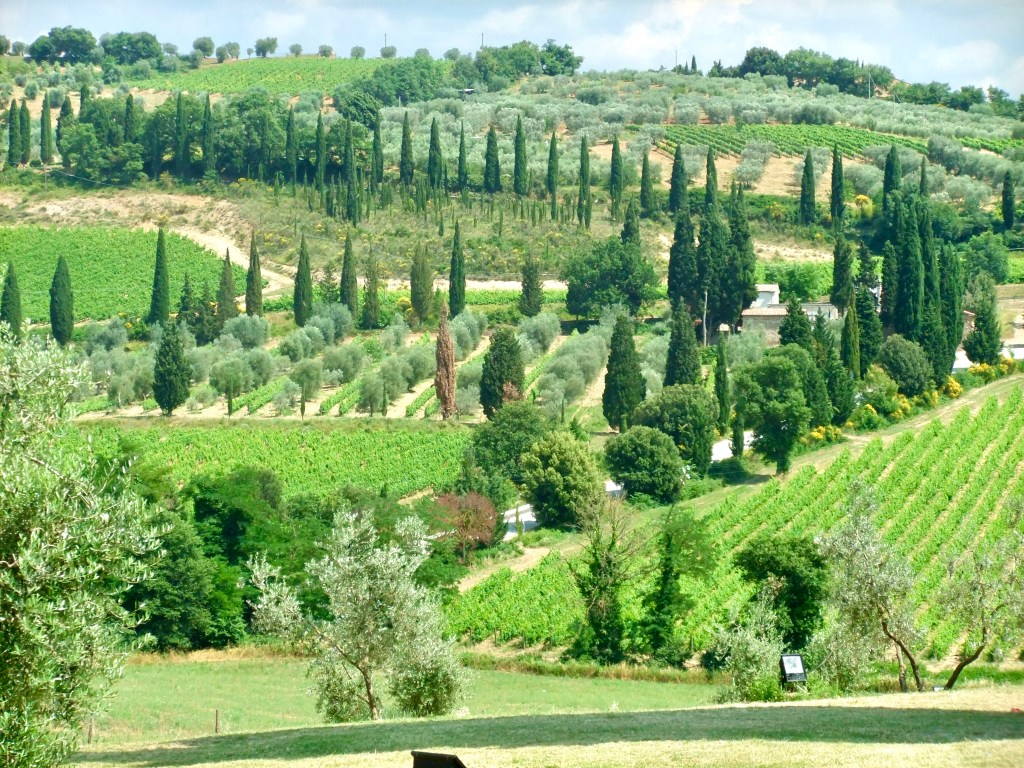
Sangiovese is the king of Tuscan wine. Holding center court with Italy’s top quality designation (DOCG) are Brunello di Montalcino, Chianti Classico near Siena, and Vino Nobile di Montepulciano.
For many years, Chianti was the best known of the trio for, shall we say, not great reasons. Its international image was tarnished by a lapse in quality and the ubiquitous presence of those little straw-covered bottles. Much has changed, all for the good, in the last two decades. Chianti Classico was awarded the coveted DOCG designation in 1996, nearly two decades after its sister appellations. Today, Brunello di Montalcino has become well known for its 100% Sangiovese purity, longest aging requirements in barrel and bottle, and typically the most expensive. Despite its aristrocratic history dating to 1350 (and 1,500 years of winemaking before that), elegant Vino Nobile di Montepulciano is not as familiar to consumers in today’s wine market as Chianti and Brunello.
I would like to help change that. And so would Tenuta Valdipiatta.
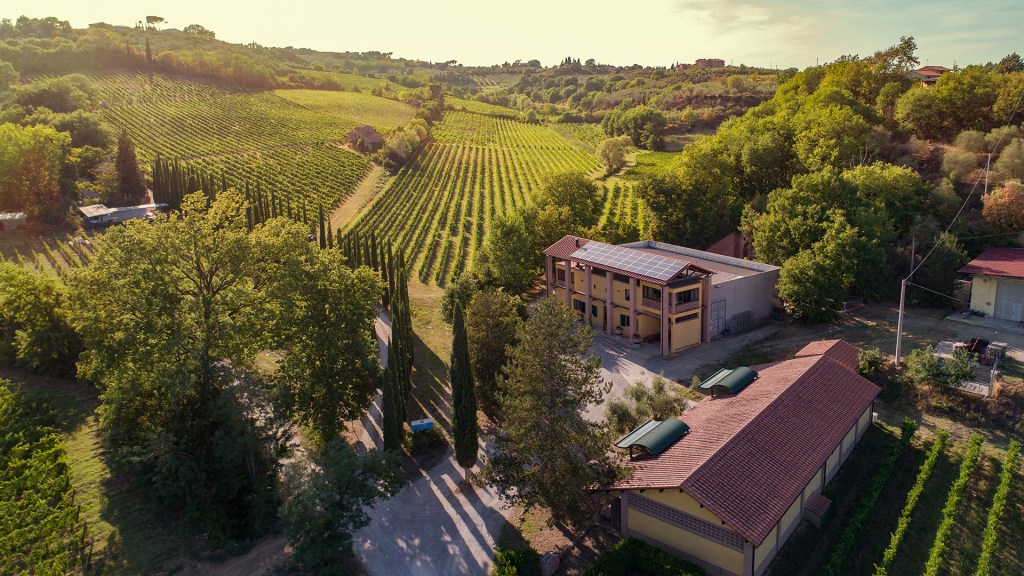
Valdipiatta is an estate vineyard founded in the 1960s during the era when Vino Nobile first achieved DOC status. Giulio Caporali purchased the estate from its original owner at the end of the 1980s. In 2002, Giulio turned the winery operations over to his daughter, Miriam, who had studied business in Rome and winemaking in Bordeaux. Over the years, leading up to organic designation by the EU in 2018, the Caporalis transformed the property into an oasis of biodiversity, a closed ecosystem, evident the moment you head down the gravel road to the winery and tasting room.
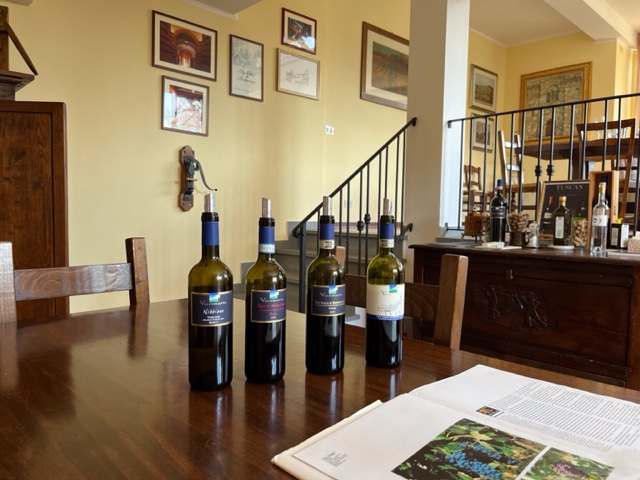
Valdipiatta’s wines reflect the elegant style of Vino Nobile: clear, bright fruit flavors, and a savory umami quality that pairs perfectly with the food of the region. In all, the winery produces a “baker’s dozen” of wines, including Grappa, available for a guided tour and tasting in several engaging formats (link to tasting options here):
- Nibbiolo, named for a nearby stream, is the winery’s only white wine. Made from 80% Sangiovese grapes (minus the skins), with 10% each of Greccheto and Malvasia, this wine is like summer in a glass.
- Rosso di Montepulciano, the “little brother” of Vino Nobile, is a fragrant, tasty, drink-now everyday wine. Current release is 2021.
- Vino Nobile di Montepulciano (current release 2019), and the Riserva aged one year longer (current release 2018), are the estate’s flagship wines. In some years, the wine is 100% Sangiovese; in other years a small amount of Canaiolo Nero is added to soften the tannins of Sangiovese.
- Vigne d’Alfiero, a single-vineyard Sangiovese selection made only in the best vintage years, is named for Alfiero Carpini, the original cellarmaster and winemaker at Tenuta Valdipiatta.
- In addition to a rosé, Valdipatta has branched out its offerings to include a Pinot Nero, two Bordeaux-style Super Tuscans (Trincerone and Trefonti), and a Chianti Colli Senesi.
- Rounding out the production are two versions of Vin Santo, the famous sweet dessert wine of Tuscany. Made from a blend of white grapes, raisined, and aged for at least three years, Vin Santo is lovely to finish a meal with contucci (cookies for dipping) or aged cheese. Occhio di Pernice (eye of the partridge) is the most prized Vin Santo, aged for six or more years to create richness and complexity of flavor.
Valdipiatta wines are available to ship directly from the winery (order in person only after a tasting experience). Wines are distributed in the U.S., Canada, Brazil, Australia, China, and Japan in addition to EU countries.









Leave a Reply