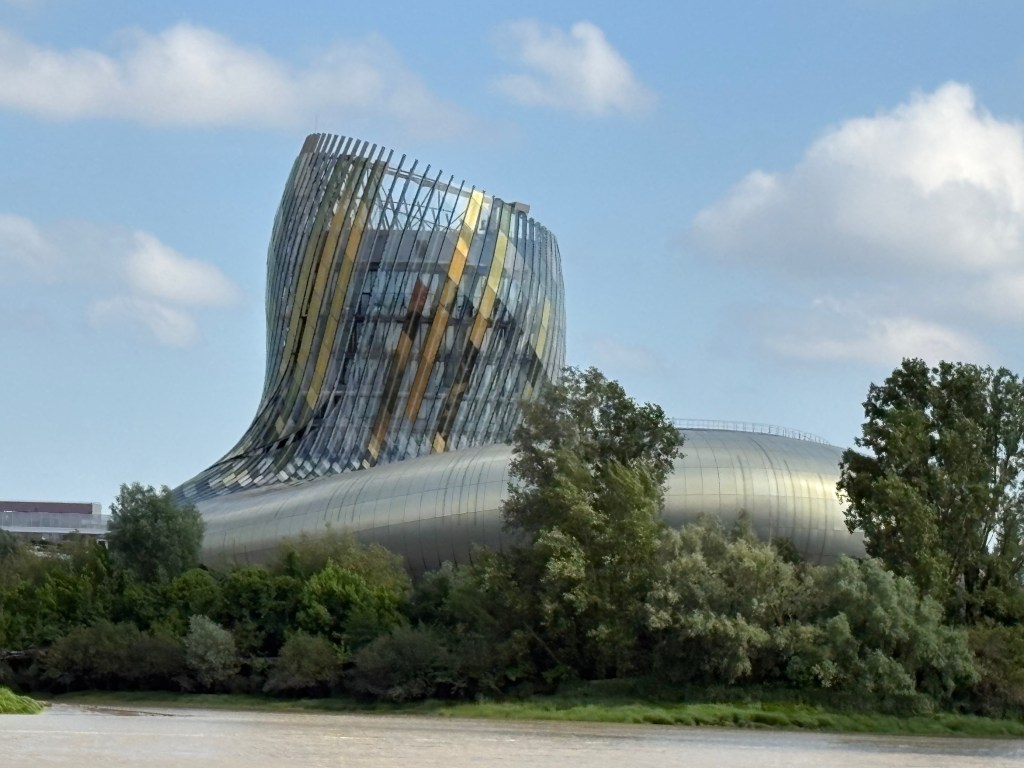
Each wine region in France offers distinctive character, wondrous to experience but somewhat maddening to understand and maneuver the nuances. Bordeaux is no different, starting with important differences between “Left Bank” and “Right Bank.”
The Gironde River flows northwest, downstream toward the Atlantic Ocean, which may seem counterintuitive. Left and right banks are determined by the viewer’s perspective on which way the water is flowing when facing downstream.
The character of the soil on each bank of this great river accounts for the most distinctive difference between them. The Left Bank enjoys a gravely soil that facilitates excellent drainage for the grapevines. The Right Bank is dominated by clay and limestone, which offers excellent water retention that is especially beneficial in dry years.
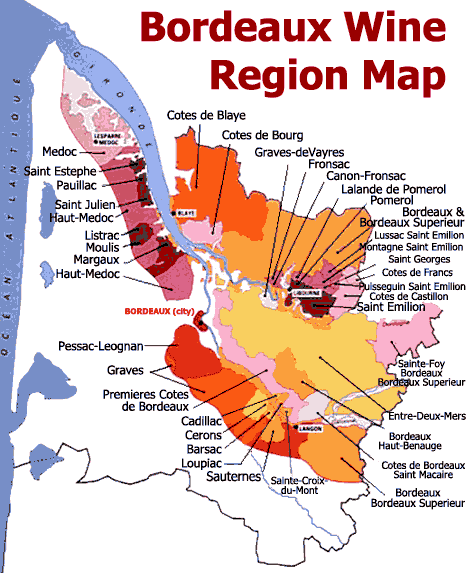
Bordeaux wines, both red and white, are almost always blended. On rare occasions, winemakers choose to make a varietal (single grape) wine.
The Left Bank and Right Bank use different classification systems. The Left Bank is based on the 1855 classification consisting of five levels of Grand Cru Classe wines based on price and quality at the time. Only two changes have been made in the 170+ years since the system was established. Conversely, the Right Bank system has been modified multiple times since first being established 100 years later, in 1955, for St. Emilion and Pomerol appellations. It is updated every ten years, most recently in 2022, for the three top-tier classes. [Note that this explanation is not comprehensive…again, one of the many complexities of French wine is this multi-level classification system: optional information for further reading.]
Most of the prestigious wineries offer a “second wine,” a term that winery guides often say is misleading. While the wine may be made from grapes that didn’t make it into the top blend, it can still be wine of excellent quality and value, providing a more approachable, affordable option for consumers.
While statistics are not readily available to support this statement, many of the wineries I visited during this April/May trip to Bordeaux own multiple vineyards and wineries. However, data are available to document the growing focus on organic and biodynamic viticulture in the region. More than 10% of all vineyards in Bordeaux are organic, and an increasing number continue the conversion process to biodynamic.
The Red Grapes of Bordeaux
The classic blend of Bordeaux Rouge includes Cabernet Sauvignon, Merlot, and Cabernet Franc. There are three more permitted grapes — Petit Verdot, Malbec, and Carménère — that may be added to the blend depending on vintage-year growing conditions, and are used sparingly to support a winemaker’s chosen style. The Left Bank recipe is typically dominated by Cabernet Sauvignon, Right Bank by Merlot.
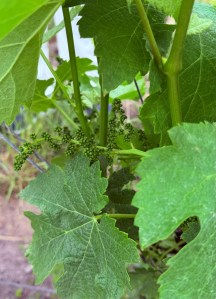
The White Grapes of Bordeaux
Two white grapes predominate in Bordeaux: 80% Semillon with 20% Sauvignon Blanc forms the classic blend. A third grape, Muscadelle, is occasionally added to the blend.
Most appellations on the Left Bank are designated for red wine, although a few chateaux make outstanding whites. All Right Bank appellations are designated for red wine. The main Bordeaux area for dry white wine is Entre-deux-Mers (between two rivers, the Garonne and Dordogne). World-famous sweet white wines from Graves and Sauternes typically include all three permitted white grapes which are “raisined” (shriveled) on the vine by botrytis, also known as noble rot. Sauternes is a protected wine area (like Champagne, for example).
Top Vintages of the Past Decade
For your wine-buying pleasure, the top vintages of the past decade from the Left Bank are 2016, 2020, and 2022. From the Right Bank the top vintages are 2022, 2019, and 2016. For collectors, complete vintage listings are available from the Wine Cellar Insider, Wine Spectator, and Wine Scholar Guild (among others).
Wine Tasting – Left Bank
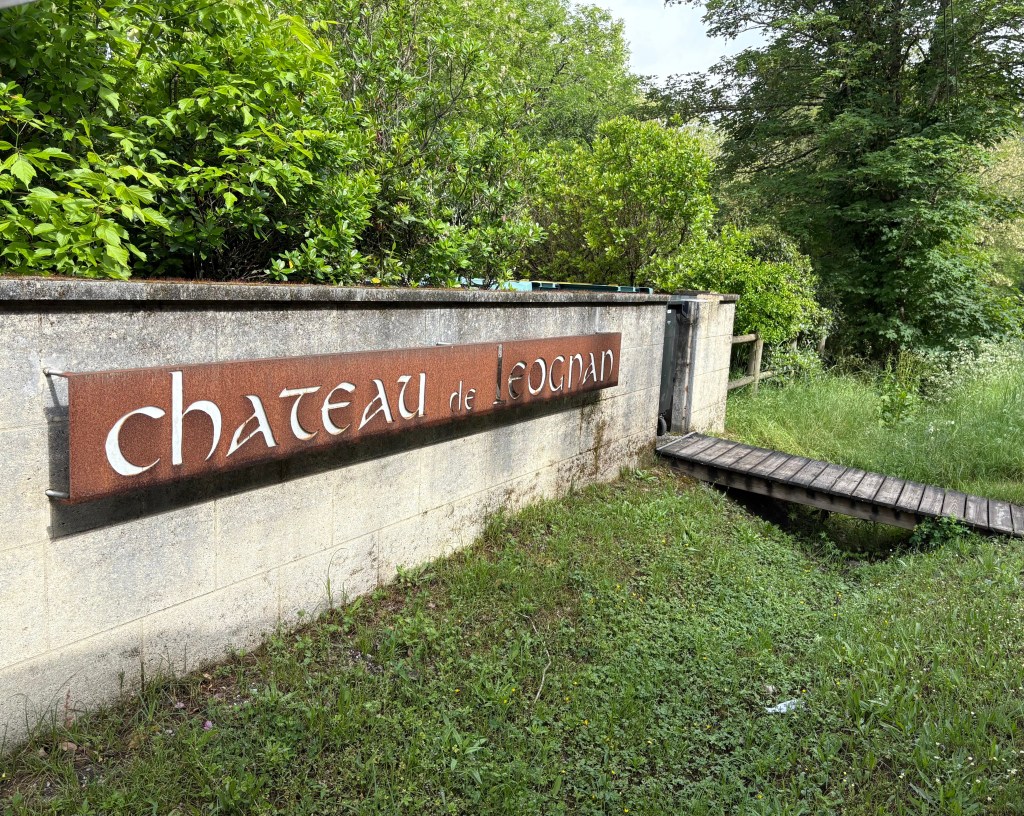
Château Léognan (Pessac-Léognan) is one of the youngest commercial wineries in Bordeaux, founded in 2006 when the Miecaze family purchased the neglected chateau and six hectares planted to Cabernet Sauvignon and Merlot vines. It was the petite remnant of a 500-hectare sheep farm that had been tended by monks starting in the 1700s. The cellars are new, and the vineyard property lies apart from the historic chateau which has been restored to a hotel that will soon be expanding. Restored buildings on the property reveal its history under the care of former owners Emma and Mathieu Seurin. When private chapels were deconsecrated after World War II, this chapel was spared. Its original consecration stone from 1897 remains intact. Le Manège restaurant occupies a former hay barn and round pen for the estate’s horses. The winery’s emblem is two phoenix drinking from the grail of eternal youth.
Château Duhart-Milon (Pauillac) has been owned by one part of the Rothschild family — the Lafite Rothschild branch — since 1962. It is a neighboring 76-hectare property in the Médoc. Grape varieties planted are 2/3 Cabernet Sauvignon and 1/3 Merlot. The property was renovated in 2020, and a new reception room was completed in 2023. The winery makes its own barrels for aging. Duhart-Milton is planting Albariño as an experiment. Other white wines are grown elsewhere in the region (Semillon, Sauvignon Gris, and Sauvignon Blanc). During our tasting we sampled a 2024 white blend (oaked), the winery’s second label made from young vines (2020), and the chateau cuvée (54% Merlot) from 2017. The latter was double decanted, which the winery highly recommends.
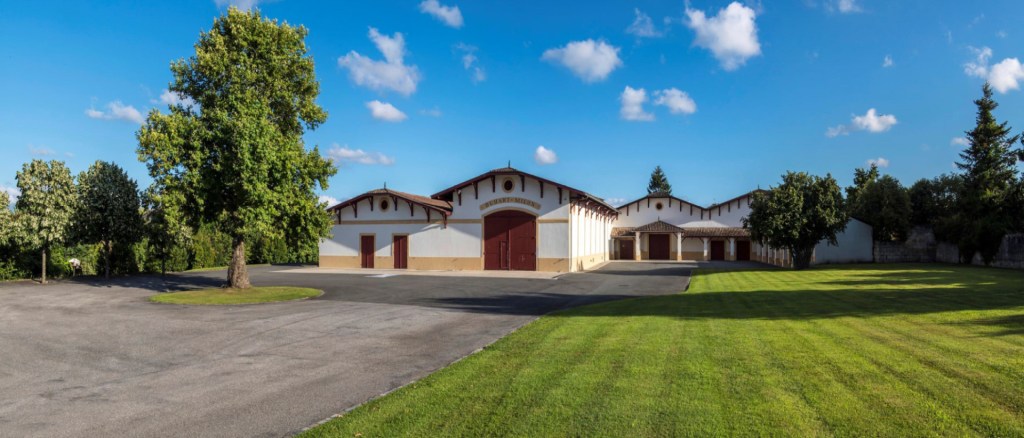
The history of Château Brainaire-Ducru (St. Julien) dates back to 1680 when Jean-Baptiste Braneyre owned the property. The family-owned chateau was built in 1824, then sold by Gustave Ducru in 1919. Brainaire-Ducru was part of the fourth grand cru classé of 1855. Since 1988 it has been owned by the Maroteaux family; François-Xavier took over management of the estate in 2017. Each plot is vinified in a different tank. Some of the tanks are suspended from the ceiling to expand capacity without enlarging the footprint of the facility. Our group tasted two wines: a 2021 second wine, and a 2016 chateau wine. The winery is expecting 2025 to be a great vintage, as well as the great vintage of 2022.
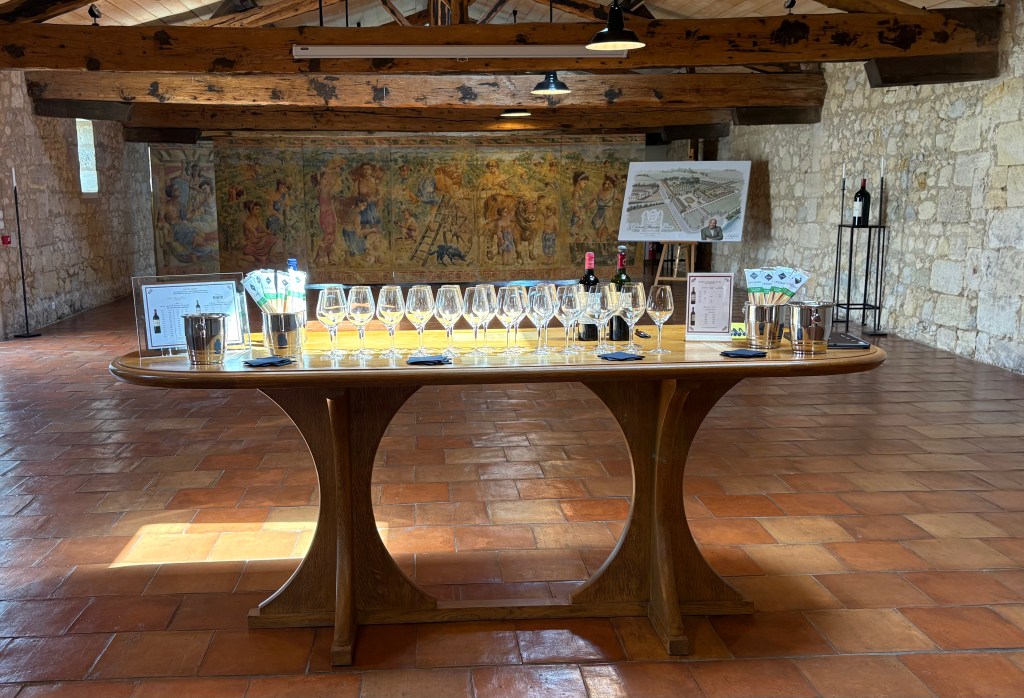
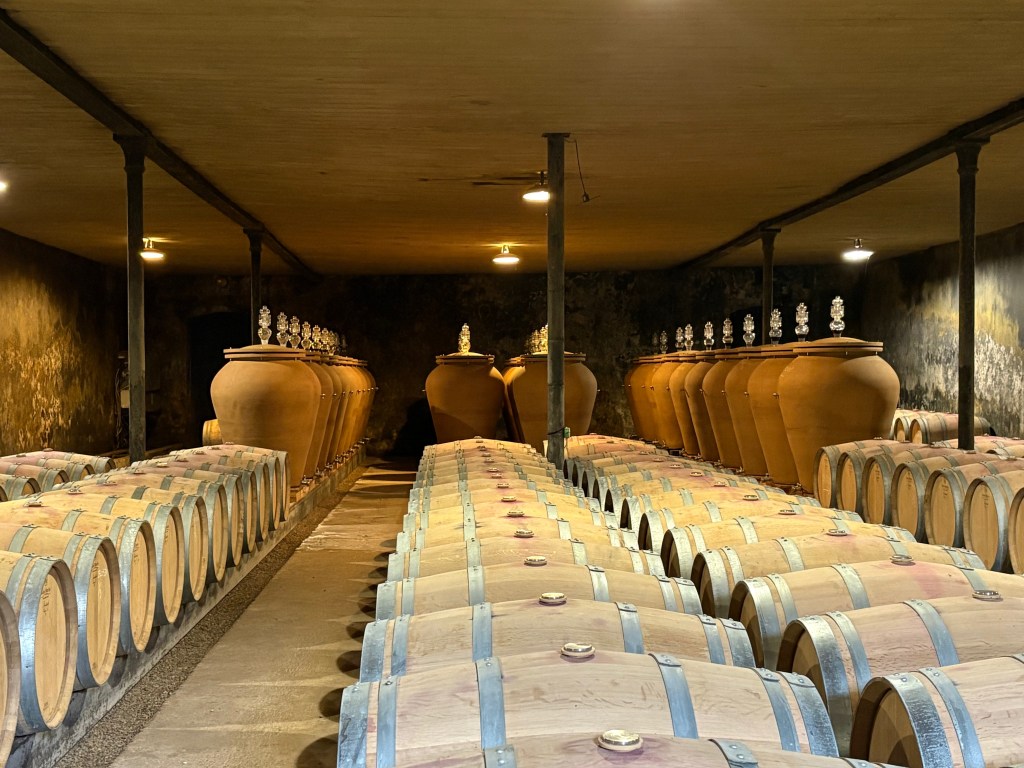
Château Angludet (Margaux) first appeared on what is believed to be the first inventory of French vineyards in 1758. Division of the property to four heirs eliminated the possibility of inclusion in the 1855 Medoc classification. was abandoned in 1956 after frost killed the vines. Wine merchants Peter and Diana Sichel bought the property in 1961, replanting and rebuilding. Today their sons Allan and Benhamin run the property as negociant and viticulturist/winemaker, respectively. The winery has been certified biodynamic since 2020; 34 amphorae were purchased in 2019 adding to cement tanks used for maceration and fermentation. Vineyards are planted to 46% Cabernet Sauvignon, 41% Merlot, and 13% Petit Verdot.
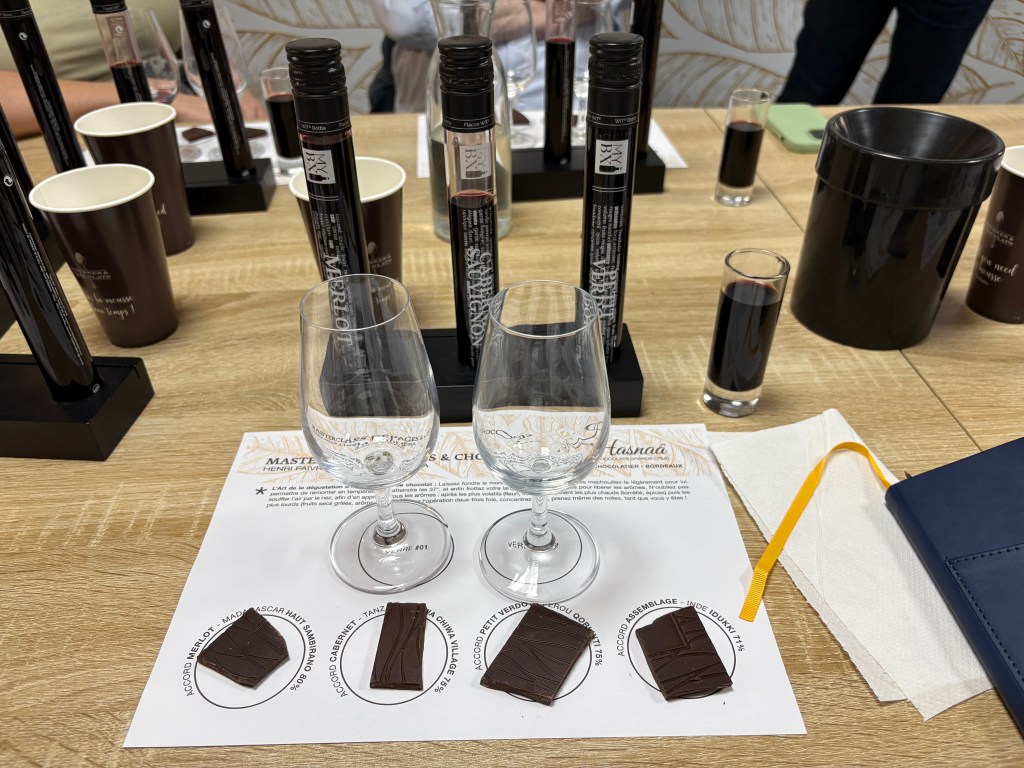
Hasnaâ Chocolats Grand Crus is owned by Hasnaâ Ferreira, a professionally trained chocolatier who started her Bordeaux business in 2014. She has consistently won awards for her craft, including most recently “Entrepreneur of the Year” by Moroccans of the World. With her husband, Vincent, Hasnaa has adopted the “bean to bar” process to control every step of production from the cocoa bean to handcrafted finish. Partnering with a sommelier, Hasnaa offers a tasting of varietal Merlot, Cabernet Sauvignon, and Petit Verdot, plus a blend of all three grapes, with chocolates of origin from Madagascar, Tanzania, Peru, and India. Wine with chocolate is not for everyone — me included — but the pairings truly offered something for each person’s tastes.
Wine Tasting – Right Bank
Château Bellefont-Belcier (St. Émilion, Grand Cru Classé) is a stunning historic property capable of hosting guests in fourteen well-appointed rooms and apartments. The vineyard was established, and the estate built, in the early 1800s by the Belcier family. “Bellefont” (beautiful fountain) was added to the name in homage to the numerous springs surrounding the estate. It is a highly regarded Saint-Émilion Grand Cru Classé estate which sits on prime clay-limestone slopes, known for its elegant, Merlot-dominant blends. Owned by Peter Kwok since 2017, the company Vignobles K includes seven winery properties situated on four different Right Bank appellations. A wine club offers memberships to receive 6 or 12 bottles delivered twice a year.
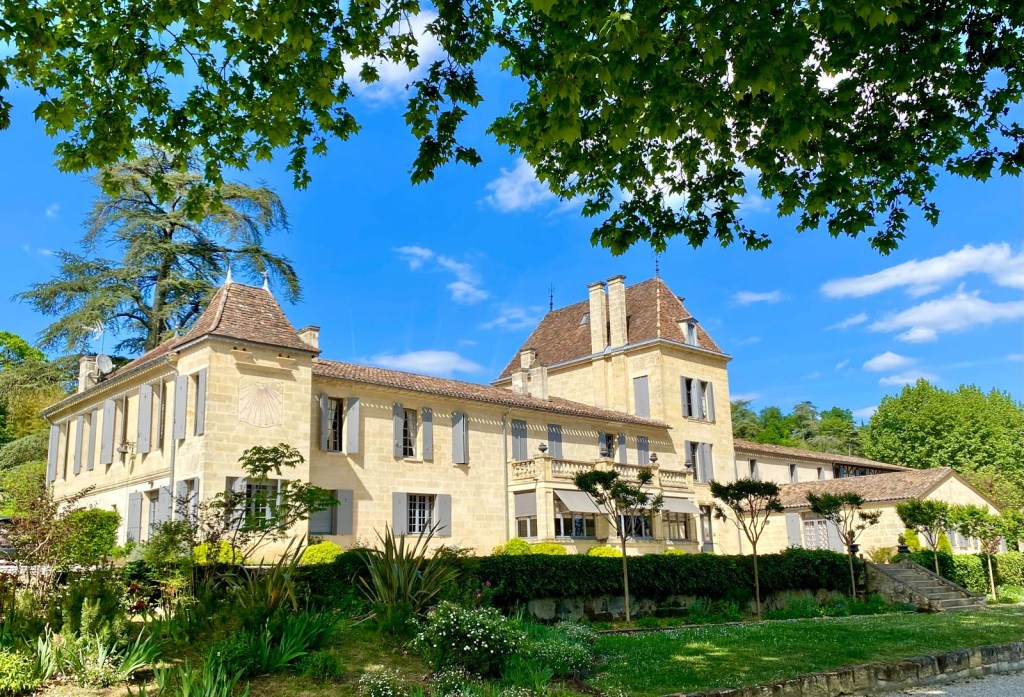
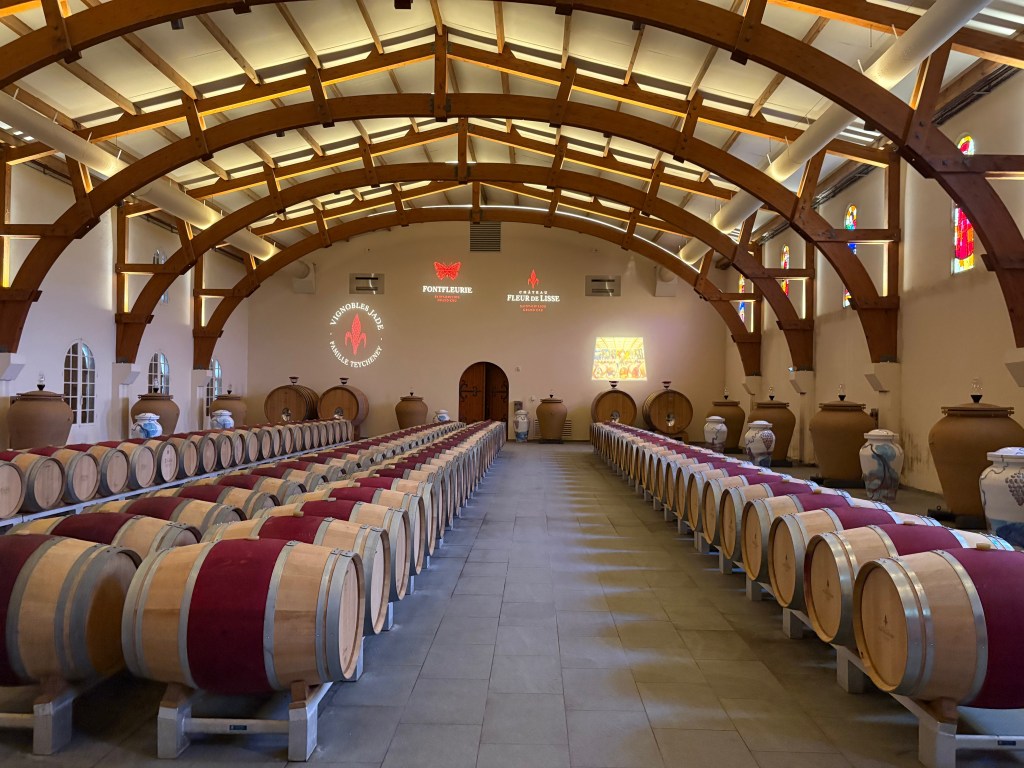
Château Fleur de Lisse (St. Émilion Grand Cru Classé) is a biodynamic winery owned by Caroline Teycheny and her father. Together they own three other wineries: Vignobles Jade, Fontfleurie, and Château la Loubiere. Fleur de Lisse is one of few wineries that produce and market varietal Cabernet Franc made from 100-year-old vines, although their wines are predominantly classic blends of Merlot, Cabernet Sauvignon, and Cabernet Franc. Private Cheffe Stéfanie Bottreau hosted our group cooking class to prepare lunch. The starter salad (highlighted by mi-cuit Foie Gras and Black Garlic Tuille) was paired with Sauvignon Blanc from Loubière (outside of the St. Émilion appellation). A classic Merlot-predominant blend complemented the main course (sage-infused veal steak with pan-seared Foie Gras and leek julienne chips). Dessert was Strawberry and Verbena Pavlova made by Cheffe Stéfanie.
Founded in 1924, Domaine Bourotte-Audy (Pomerol) is managed by Jean-Baptiste Bourotte, great-grandson of founder Jean-Baptiste Audy and former executive with Cartier jewelers. The five winery properties managed by this multi-faceted business include Clos du Clocher, Château Bonalgue, Château Les Hautes-Conselliants, and Château de Courlat. Only Ch. de Courlat is located in St. Émilion. A range of touring, tasting, group events, and vineyard stays are available at several of the properties. D. Bourotte-Audy practices organic viticulture with some biodynamic practices.
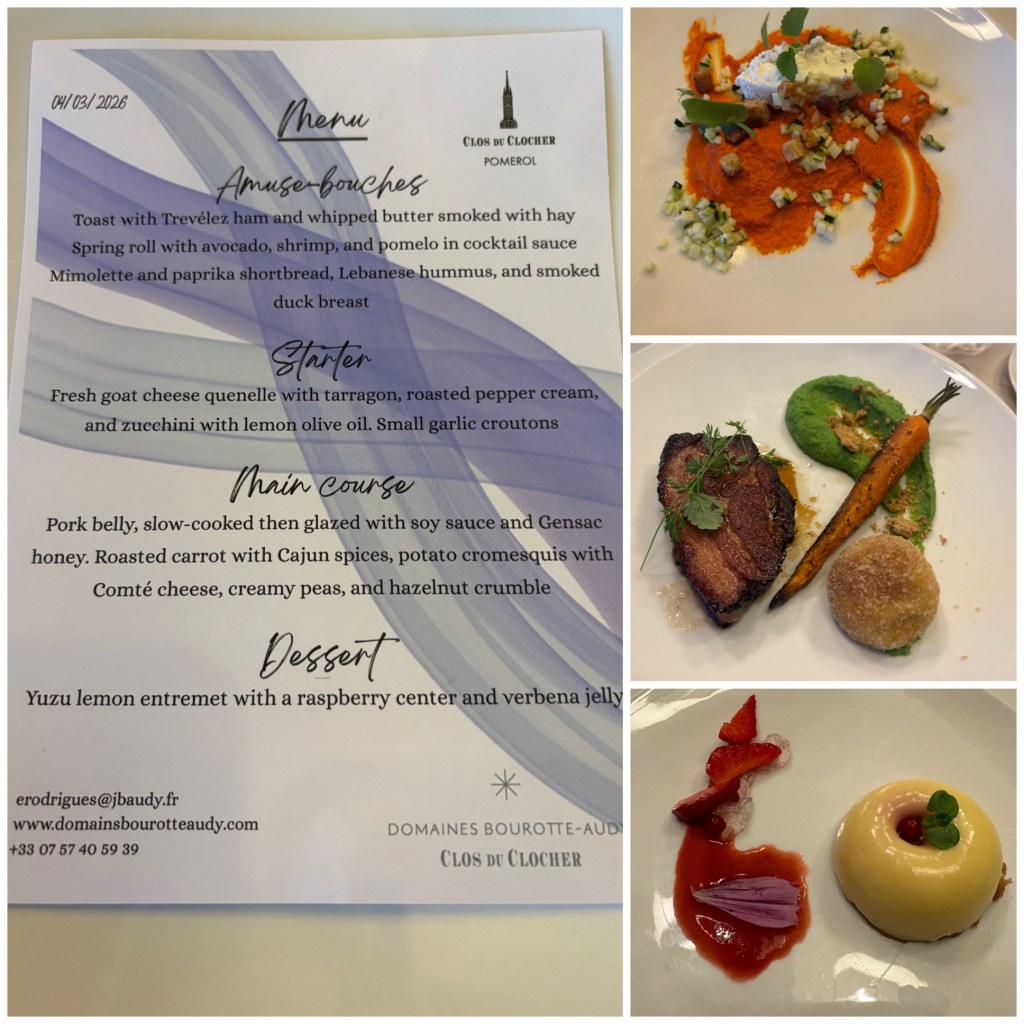
Photo Credits: unless otherwise noted, photos by Kathy Merchant
Wine Regions of France, French Wine Guide by Terroir France
Chateau Bellefont-Belcier, by Timothy Fallen-Bailey
Chateau Duhart-Milon courtesy of Cult Wine Investment






Leave a comment